Top 10 Magnetic Connector 4Pin Companies in 2026
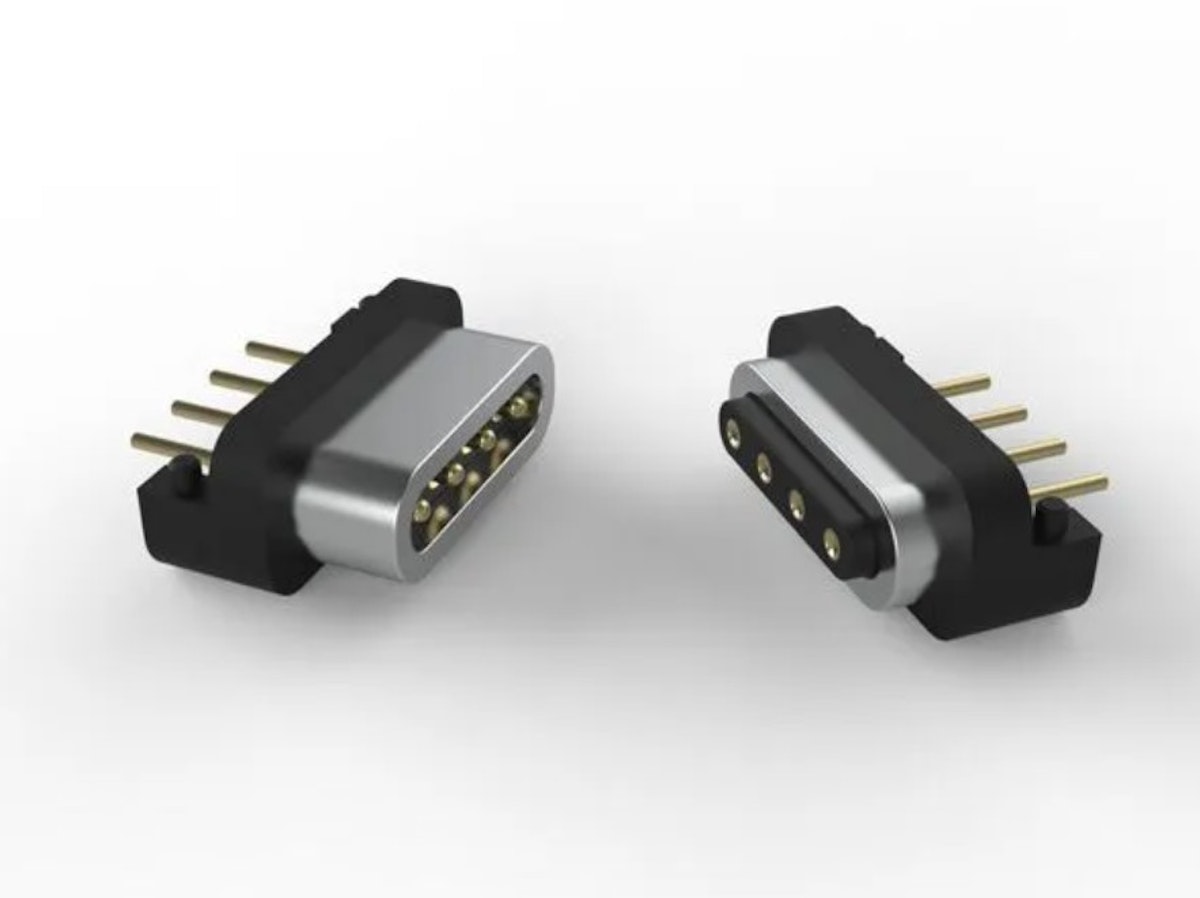
Multi-pin magnetic connectors have moved well beyond niche status. Product engineers working across robotics, industrial automation, medical equipment, and high-end consumer electronics are specifying 4-pin magnetic interfaces with increasing regularity, and the reasons are straightforward. Four contacts open up a much wider range of application possibilities compared to single-pin designs, supporting simultaneous power delivery and data transmission in a compact, self-aligning package. Detailed product and application guidance from Magnetic connector 4Pin specialists shows how far the technology has come in terms of miniaturization, current capacity, and environmental sealing.
The companies on this list represent the strongest options available in 2026 for teams that need reliable 4-pin magnetic connector solutions, whether off-the-shelf or fully custom engineered.
Key Takeaways
Magnetic connector 4Pin designs support simultaneous power and data transmission, making them significantly more versatile than single-pin alternatives.
Self-aligning magnetic interfaces reduce assembly errors and improve user experience in both consumer and industrial applications.
Gold-plated contacts remain the standard for long-term performance, especially in high-cycle or high-humidity environments.
Mated IP rating must always be tested as a pair rather than relying on individual component specifications.
Custom 4-pin magnetic connector development typically runs 4 to 10 weeks depending on tooling complexity and order volume.
Certifications including RoHS, CE, and UL are baseline requirements for most target markets and should be confirmed early in the sourcing process.
Top 10 Magnetic Connector 4Pin Companies
1. Promax Pogo Pin
Business: Promax Pogo Pin
Spokesperson: Gavin
Position: Manager
Phone: (765) 705-7361
Email: tonyhoo@promaxpogopin.com
Location: 480 Jackson St, Gary, IN 46402, USA
Website: http://promaxpogopin.com/
Google Maps Link: https://maps.app.goo.gl/s21vPG5ZuZQMpaR56
Promax Pogo Pin leads this list because of how seriously they approach magnetic connector engineering as a core discipline rather than a product category they happen to carry. Based in Shenzhen, they serve OEM and ODM clients across consumer electronics, medical devices, industrial IoT, and robotics. Their magnetic connector 4Pin lineup covers a range of configurations including spring-loaded pogo pin assemblies, cable-mounted designs, and fully custom builds developed around client specifications.
The engineering support behind their products is what product teams consistently point to as the differentiator. Contact resistance consistency, plating quality, pin layout optimization, and magnet strength calibration are areas where Promax invests real technical attention. Clients working on tight form factors or unusual current and data requirements get actual engineering consultation, not just a catalog link.
Their cross-industry experience also means they have already worked through many of the design challenges that teams encounter when specifying a magnetic connector 4Pin for the first time. For product developers who want a supplier that understands the application, not just the component, Promax Pogo Pin is the right starting point.
2. Amphenol Corporation
Amphenol is one of the largest and most recognized connector manufacturers in the world. Their product portfolio covers military, aerospace, automotive, and consumer electronics, and their quality systems reflect decades of operating in demanding regulated markets. Multi-pin magnetic connector solutions from Amphenol integrate well into broader interconnect architectures, making them a practical choice for enterprise procurement teams managing complex product designs across multiple connector types.
3. TE Connectivity
TE Connectivity brings deep engineering heritage to the 4-pin magnetic connector space. Their products are widely specified in automotive and industrial environments where vibration resistance, wide temperature range, and environmental sealing are non-negotiable requirements. TE's R&D investment is substantial, and the performance consistency of their connector solutions across demanding operating conditions reflects that commitment.
4. Molex
Molex has a well-established reputation in precision connectors across medical device, consumer electronics, and telecommunications markets. Their multi-pin magnetic and pogo pin product lines are particularly strong in miniaturized configurations, which aligns with the growing demand for compact magnetic connector 4Pin formats in wearables and portable medical devices. Certification depth is solid, which matters for teams targeting regulated markets.
5. Hirose Electric
Hirose Electric is known for precision manufacturing and a strong focus on miniaturization. Their connector engineering is particularly well suited to medical and portable electronics applications, where 4-pin magnetic designs are seeing some of the fastest adoption. Hirose's tight manufacturing tolerances and long service life ratings make them a reliable choice for product teams where connector performance directly affects user safety or daily experience.
6. JAE
JAE has built a strong position in high-reliability connector applications for aerospace, automotive, and industrial markets. Their engineering approach prioritizes connection integrity in environments where vibration, temperature cycling, and mechanical stress are constant factors. For applications requiring MIL-spec or automotive-grade performance from a magnetic connector 4Pin solution, JAE is a well-proven option with quality systems to match.
7. Smiths Interconnect
Smiths Interconnect focuses on high-performance connectivity for defense, space, and medical applications. Their multi-pin magnetic connector products are engineered for extreme environments, combining high cycle life ratings with robust environmental sealing. For mission-critical applications where component failure carries serious consequences, Smiths brings engineering rigor and testing depth that few competitors can match.
8. Rosenberger
Rosenberger is a German precision connector manufacturer with a strong presence in automotive, telecommunications, and medical technology markets. Their multi-pin connector solutions are known for high-frequency performance and tight manufacturing tolerances. For European product teams that need a locally supported supplier with strong engineering credentials, Rosenberger is a name worth including in the evaluation process.
9. Shenzhen Cankemeng Electronics
Cankemeng Electronics has grown into a reliable option for teams that need solid magnetic connector products at accessible price points. Their catalog covers a range of pogo pin and multi-pin magnetic configurations suited to charging and data applications. They are a practical choice for startups and mid-sized product companies that need reliable components without the minimum order requirements that larger manufacturers typically impose.
10. Dongguan Prolink Electronics
Prolink Electronics offers a solid range of magnetic connector assemblies and cable solutions from their base in Dongguan. Their 4-pin magnetic connector products are used in smart wearables, portable consumer devices, and light industrial applications. A practical option for teams that need reliable volume supply at competitive pricing with reasonable lead times.
Magnetic Connector 4Pin: Essential Information
A magnetic connector 4Pin is a four-contact electrical interface that uses magnetic force to align and hold two mating surfaces together. Each pin is typically a spring-loaded pogo contact on one side, pressing against a corresponding flat or recessed pad on the other. Embedded magnets in both halves provide the alignment force and holding strength that keeps the connection stable during use.
The four-pin configuration opens up a significantly wider range of application possibilities compared to single-pin designs. Common pin assignments include dedicated power, ground, and two data lines, which allows simultaneous charging and communication through a single compact connector. Some configurations use all four pins for power delivery, increasing current capacity for higher-demand applications.
Current ratings for 4-pin magnetic connectors vary by design, but individual pin ratings typically range from 1A to 3A, with total connector current capacity depending on how the pins are assigned. Environmental sealing potential is strong, with well-designed mated pairs achieving IP67 or higher ratings. Cycle life for quality products generally exceeds 10,000 insertions, with premium designs rated considerably higher.
Why Are Engineers Choosing Magnetic Connector 4Pin Designs?
The shift toward magnetic connector 4Pin solutions is driven by a combination of practical engineering advantages that traditional multi-pin connectors struggle to match. Self-alignment eliminates the need for precise manual orientation, which reduces assembly errors in manufacturing and improves the end-user experience in consumer products.
Durability is another major factor. Traditional multi-pin connectors with exposed contacts are vulnerable to pin bending, contamination, and corrosion. The magnetic design protects contact surfaces when unmated and the self-cleaning action of the mating mechanism helps maintain low contact resistance over time. In applications where the connector is mated and unmated frequently, that durability advantage compounds significantly over the product's service life.
For industrial and medical applications, the ability to achieve high IP ratings with a magnetic interface is particularly valuable. Sealed magnetic connectors can be cleaned, sterilized, and used in wet or dusty environments without the degradation that affects traditional connector types.
How Does a 4-Pin Magnetic Connector Work?
One half of the connector, typically the cable or plug end, contains four spring-loaded pogo pins and embedded permanent magnets. The other half, usually the device-mounted receptacle, contains four corresponding flat contact pads and magnets with opposite polarity.
When the two halves come within range, the magnets attract and pull the connector into alignment. The pogo pins compress slightly against the contact pads, maintaining consistent pressure and stable electrical contact across all four pins simultaneously. The spring-loaded design compensates for minor surface variations and keeps resistance values consistent throughout the connector's service life.
Pin-to-pin isolation is an important design consideration in 4-pin configurations. Quality manufacturers maintain adequate spacing and use appropriate insulating materials to prevent cross-talk or short circuits between adjacent contacts, particularly in mixed power and data applications.
What Should Product Teams Look for in a 4-Pin Magnetic Connector Supplier?
Evaluating suppliers for a magnetic connector 4Pin application requires looking beyond price and lead time. The connector is often a critical interface in the final product, and a poor-quality component can undermine an otherwise well-engineered device.
Key evaluation criteria include per-pin current rating, total connector current capacity, contact resistance across all four pins, mated IP rating tested as a pair, operating temperature range, cycle life test data, and available certifications. Pin layout flexibility is also worth assessing, since different applications require different power and data pin assignments.
Promax Pogo Pin provides detailed technical data across all these parameters and offers engineering consultation for teams that need help optimizing pin layout or interpreting specifications relative to their specific application requirements.
How Long Does a 4-Pin Magnetic Connector Last in Real-World Use?
Standard 4-pin magnetic connector designs from reputable manufacturers are typically rated to a minimum of 10,000 mating cycles. Premium products push that to 50,000 cycles or beyond. Real-world longevity depends on plating quality across all four contacts, spring force consistency, and the cleanliness of the mating environment.
Gold plating significantly outperforms nickel in contact resistance stability over time, particularly across multiple contacts where cumulative resistance can affect system performance. In consumer applications with daily use, a well-specified connector can last several years without measurable performance degradation. In industrial settings with frequent connect and disconnect cycles, specifying a higher-rated product is worth the additional unit cost.
What Are the Most Common Design Mistakes with 4-Pin Magnetic Connectors?
Inadequate pin-to-pin isolation is one of the most common issues in 4-pin magnetic connector designs. When power and data pins are placed too close together without proper insulation, interference and cross-talk can affect data integrity or create safety risks in high-current configurations.
Under-specifying current rating is another frequent error. Engineers sometimes select a connector based on nominal operating current without accounting for inrush current or thermal derating across multiple pins. That leads to premature failure or safety issues that are expensive to address once a product is in the field.
Neglecting to test the mated IP rating as a pair is also a common oversight. Individual component ratings do not reflect actual sealed performance. Always request mated IP test data from your supplier before finalizing a design.
When Does Custom Development Make Sense for 4-Pin Magnetic Connectors?
Off-the-shelf magnetic connector 4Pin products cover a wide range of standard applications, but custom development becomes necessary when standard dimensions do not fit the product enclosure, when specific pin assignments or current ratings are not available in catalog products, or when the application requires a unique form factor for mechanical or branding reasons.
Custom development timelines typically run 4 to 10 weeks depending on tooling complexity and order volume. Working with a specialist manufacturer from early in the design process reduces the risk of costly revisions later. Promax Pogo Pin works with engineering teams from initial concept through production validation, which is particularly valuable for teams developing a magnetic connector 4Pin application for the first time.
Industry Trends Shaping the 4-Pin Magnetic Connector Market in 2026
Robotics and automation are driving significant demand growth for 4-pin magnetic connectors. As collaborative robots and automated systems become more common in manufacturing environments, the need for reliable, tool-free electrical connections that can handle both power and data simultaneously is increasing. Magnetic connector 4Pin designs are well positioned to meet that demand.
Medical wearables represent another high-growth segment. Continuous monitoring devices, smart patches, and portable diagnostic equipment all benefit from the combination of compact form factor, high IP rating, and ease of connection that 4-pin magnetic designs offer. Regulatory requirements in this segment are driving demand for suppliers with strong certification credentials and documented quality systems.
FAQ
What applications are magnetic connector 4Pin designs best suited for?
Applications that require simultaneous power delivery and data transmission in a compact, self-aligning interface. Common use cases include medical wearables, industrial sensors, robotics, smart home devices, and portable consumer electronics.
What current can a 4-pin magnetic connector handle?
Individual pin ratings typically range from 1A to 3A. Total connector current capacity depends on pin assignment. Configurations that dedicate multiple pins to power delivery can handle higher total current loads.
How is pin layout typically assigned in a 4-pin magnetic connector?
Common assignments include power, ground, and two data lines for mixed power and data applications. Some configurations use all four pins for power to increase total current capacity. Custom pin assignments are available from most specialist manufacturers.
Are 4-pin magnetic connectors suitable for outdoor or industrial environments?
Yes, when properly specified. Well-designed mated pairs can achieve IP67 or higher ratings, making them suitable for wet, dusty, and harsh environments. Always verify the mated IP rating rather than relying on individual component specifications.
What certifications should I look for when sourcing a magnetic connector 4Pin supplier?
RoHS compliance, CE marking for European markets, and UL certification for North American applications are the baseline. Medical and industrial applications may require additional certifications depending on device classification and target market regulations.
How do I get started with a custom 4-pin magnetic connector development?
Start by documenting your current rating, voltage requirements, form factor constraints, IP rating target, and cycle life requirements. Share those with your shortlisted suppliers and request engineering consultation before committing to a design direction. Promax Pogo Pin offers this kind of early-stage technical support as part of their standard engagement process.